The hidden ingredient that's been sabotaging your morning cup (and how to fix it in 5 minutes)
The $20 Lesson That Changed Everything
Picture this: You've just spent $30 on premium single-origin beans from that trendy local roaster. You've dialed in your grind size, perfected your pour technique, and timed everything down to the second. But when you take that first sip... it tastes flat. Disappointing. Maybe even a little bitter.
Sound familiar?
Here's what I discovered after years of chasing the perfect cup: Your water has been the problem all along.
I learned this the hard way during a cupping session at a specialty coffee shop in Portland. The barista served the exact same beans brewed with three different waters: tap, filtered, and their custom "coffee water." The difference wasn't subtle- it was shocking. The tap water version tasted muddy and harsh. The filtered water improved things but still felt flat. But their custom water? Pure magic. Bright, clean, with flavors I never knew existed in that coffee.
That $20 cupping fee taught me more about coffee than hundreds of dollars spent on expensive equipment ever had.
The Truth
Here's something that might surprise you: water makes up 98% of your coffee. Not 50%. Not 75%. Nearly the entire cup.
Yet most of us obsess over the remaining 2%- the beans, the grind, the technique- while completely ignoring the foundation of our brew. It's like building a mansion on quicksand and wondering why the walls keep cracking.
The coffee industry has known this secret for decades. Championship baristas don't just bring their own beans to competitions- they bring their own water. Professional roasters spend thousands on water treatment systems. The best coffee shops in the world consider their water recipe as closely guarded as their espresso blend.
But somehow, this knowledge never made it to your kitchen counter.
Until now.
Tap Water Is Sabotaging Your Coffee
"But I live in [insert city], and our tap water tastes great!"
I hear this all the time. And you might be right- your water probably tastes fine on its own. But coffee extraction is chemistry, not opinion. And chemistry doesn't care about your taste preferences.
The Goldilocks Problem
Your coffee needs water that's "just right"- not too hard, not too soft, with just the right mineral balance. Here's what happens when it's wrong:
Too Soft (Low Minerals)
- Think of distilled water or those areas with naturally soft water
- Your coffee becomes over-extracted and bitter
- Flavors turn harsh and unpleasant
- Like trying to shake hands with a wet fish- no structure, no body
Too Hard (High Minerals)
- Common in areas with limestone or chalk in the water supply
- Your coffee becomes under-extracted and sour
- Tastes weak, flat, and acidic
- Plus, it'll destroy your equipment with scale buildup
Just Right (Balanced Minerals)
- The sweet spot where coffee flavors shine
- Proper extraction brings out complexity and balance
- Your morning cup finally tastes like those tasting notes on the bag
The Chlorine Conspiracy
Even if your mineral levels are perfect, there's another villain lurking in your tap water: chlorine.
Municipal water treatment plants add chlorine to kill bacteria (which is great for public health). But chlorine is also fantastic at killing the delicate flavor compounds in your coffee. It creates medicinal, chemical off-tastes that mask the coffee's natural characteristics.
One simple test: Fill two glasses with your tap water. Let one sit uncovered for 24 hours, then taste them side by side. The overnight glass will taste noticeably better because the chlorine has evaporated. Your coffee deserves that same consideration.
Test Your Water
Before we dive into solutions, let's diagnose your water situation. This takes less than 5 minutes and costs almost nothing.
The Home Test Kit Method
Grab a TDS (Total Dissolved Solids) meter from Amazon for about $10. These little gadgets measure the mineral content in your water- the single most important factor for coffee brewing.
Test your tap water and write down the number.
Here's what it means:
- 0-75 ppm: Too soft (you'll need to add minerals)
- 75-150 ppm: Perfect for espresso
- 150-300 ppm: Ideal for drip/pour-over coffee
- 300+ ppm: Too hard (you'll need filtration)
The Taste Test
Here's a fun experiment that costs nothing but will change how you think about coffee forever:
- Brew the same coffee with three different waters: tap, bottled spring water, and distilled water
- Taste them side by side (let them cool to the same temperature first)
- Notice the differences in brightness, body, and overall flavor
I guarantee you'll never think about water the same way again.
The Water Hierarchy
Let me break down your options, from the water that's actively hurting your coffee to the solutions that will transform your morning routine.
Tier 1: Tap Water (The Wild Card)
The Reality: Your tap water might be great, or it might be terrible. Geography is destiny here.
When It Works: Some lucky areas (parts of the Pacific Northwest, certain European cities) have naturally excellent coffee water. Low chlorine, balanced minerals, proper pH.
When It Doesn't: High chlorine content, extreme hardness or softness, off-flavors from old pipes or treatment chemicals.
The Bottom Line: Test first, assume nothing.
Tier 2: Basic Filtered Water (Better, But Not There Yet)
What It Does: Removes chlorine and some contaminants through activated carbon filtration.
What It Doesn't Do: Address mineral content or pH issues.
Best For: A quick improvement if your main problem is chlorine taste.
Popular Options: Brita, PUR, basic under-sink filters.
Tier 3: Bottled Spring Water (The Convenient Compromise)
The Good: Many spring waters have naturally balanced mineral profiles perfect for coffee. No chlorine, consistent quality.
The Bad: Expensive long-term, environmental impact, storage hassles.
Pro Tip: Not all spring waters are created equal. Crystal Geyser and Fiji tend to work well for coffee. Avoid anything labeled "purified" or "distilled."
Tier 4: Reverse Osmosis + Remineralization (The Professional Standard)
How It Works: Strip everything out with RO, then add back precisely the minerals you want.
The Advantage: Complete control over your water chemistry.
The Investment: $200-500 for a good home system, plus ongoing filter costs.
Best For: Serious enthusiasts who want maximum control.
Tier 5: Custom Coffee Water (The Holy Grail)
What It Is: Water specifically formulated for coffee extraction with precise mineral ratios.
Commercial Options: Third Wave Water, Perfect Coffee Water, Lotus Water.
DIY Route: Mix distilled water with mineral packets or create your own recipe.
The Result: Water designed from the ground up to make coffee taste incredible.
The Fix
Don't want to become a water chemistry expert? Here are three solutions that will dramatically improve your coffee in the next 5 minutes:
Solution 1: The Emergency Fix (Free)
Fill your kettle with tap water and let it sit uncovered for 30 minutes before brewing. This allows chlorine to evaporate. Not perfect, but instantly better than straight tap water.
Solution 2: The Weekend Warrior ($15)
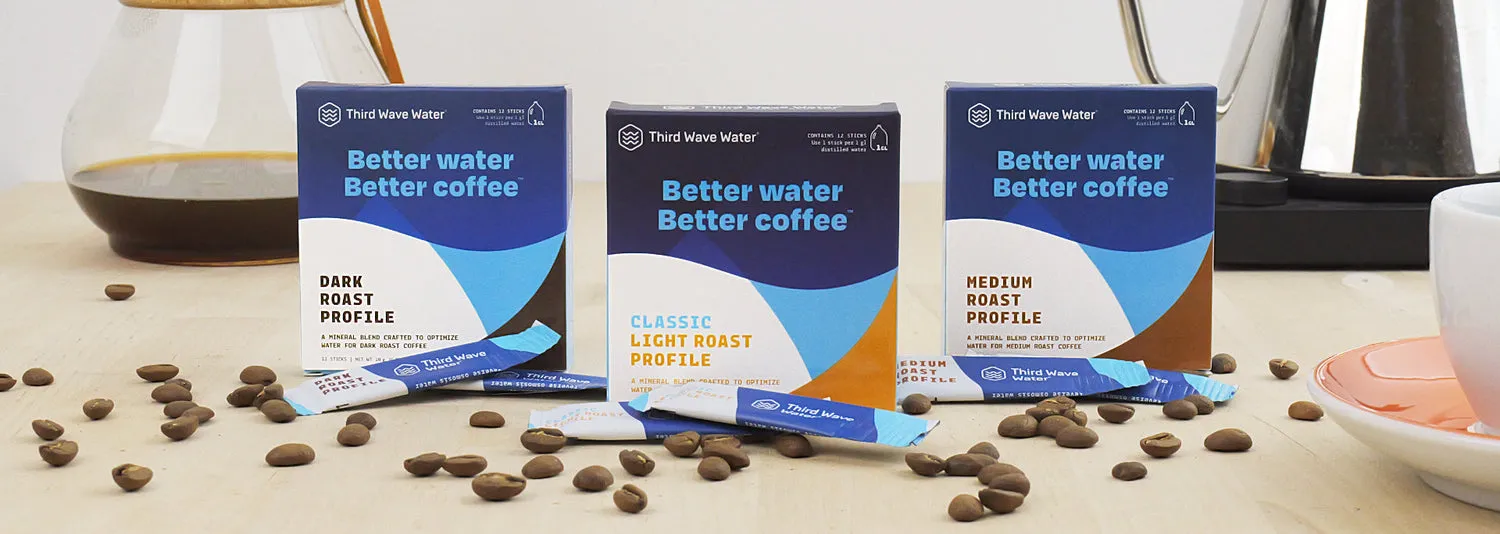
Buy a bottle of Third Wave Water or similar coffee water enhancer. Mix with distilled water according to package directions. This gives you professional-quality coffee water for about $0.30 per cup.
Solution 3: The Committed Coffee Lover ($50-100)
Install a quality carbon filter system (like the ones from Berkey or Aquasana). This handles chlorine and many contaminants while preserving beneficial minerals.
Advanced Strategies
The DIY Water Recipe
Professional coffee competitors often create their own water blends. Here's a simple recipe that works for most coffees:
Base: 1 gallon distilled water
Add: 1/4 teaspoon food-grade epsom salt (magnesium)
Add: 1/4 teaspoon baking soda (alkalinity buffer)
This creates balanced water perfect for highlighting coffee's natural flavors.
The Regional Adaptation
Your perfect water strategy depends on where you live:
Hard Water Areas (Midwest US, parts of UK, limestone regions):
- Focus on softening or dilution
- Consider reverse osmosis systems
- Regular descaling is crucial
Soft Water Areas (Pacific Northwest, Scotland, some mountain regions):
- Add minerals back to prevent over-extraction
- Third Wave Water or similar products work great
- Avoid distilled water entirely
High Chlorine Areas (most major cities):
- Carbon filtration is your best friend
- Let water sit overnight if using immediately
- Consider whole-house filtration for heavy use
The Equipment Consideration
Your brewing method affects your ideal water choice:
Espresso: Prefers softer water (75-150 ppm TDS) to avoid scale buildup in expensive machines.
Pour-Over/Drip: Can handle harder water (150-300 ppm TDS) and actually benefits from the mineral content for proper extraction.
French Press: Very forgiving, works well with most balanced waters.
Cold Brew: Benefits from slightly harder water due to the long extraction time.
Common Mistakes
Even with perfect water, these mistakes can sabotage your coffee:
Mistake 1: Temperature Inconsistency
Great water at the wrong temperature is still bad coffee. Invest in a variable temperature kettle or at least a thermometer.
Mistake 2: Old Filter Syndrome
That Brita filter isn't immortal. Replace it according to the schedule, not when you remember to check it.
Mistake 3: The Storage Problem
Filtered water doesn't keep forever. Use it within a few days, and store it in clean, covered containers.
Mistake 4: Ignoring Scale Buildup
Even with good water, minerals will accumulate in your equipment. Regular descaling isn't optional- it's essential.
Troubleshooting
Fixed your water but still not satisfied? Here's your diagnostic checklist:
If Your Coffee Tastes Sour/Acidic:
- Your water might be too soft (under-extraction)
- Try adding mineral content or switching to spring water
- Check your grind size (might be too coarse)
If Your Coffee Tastes Bitter/Harsh:
- Your water might be too hard (over-extraction)
- Try filtering or diluting your current water
- Check your grind size (might be too fine)
If Your Coffee Tastes Flat/Dull:
- Could be chlorine or old filters
- Check water freshness and filter replacement schedule
- Might need more mineral content for proper extraction
If Your Coffee Tastes Metallic/Chemical:
- Definitely a chlorine or contamination issue
- Upgrade your filtration system
- Consider the age of your plumbing
Investment Breakdown
Let's talk real numbers based on different coffee habits:
The Casual Drinker (1-2 cups daily)
Best Option: Third Wave Water packets or quality spring water
Monthly Cost: $15-25
Why: Simple, effective, no equipment maintenance
The Daily Devotee (3-5 cups daily)
Best Option: Under-sink carbon filter system
Initial Investment: $100-200
Monthly Cost: $10-15 (filter replacements)
Why: Convenient, consistent, cost-effective long-term
The Coffee Obsessive (Multiple brewing methods, entertaining)
Best Option: Reverse osmosis + remineralization system
Initial Investment: $300-500
Monthly Cost: $20-30
Why: Complete control, works for all brewing methods, impresses guests
The Professional Home Barista
Best Option: Custom water recipes + backup systems
Initial Investment: $500-1000
Monthly Cost: $30-50
Why: Precision, experimentation, café-quality results
Your Next Steps:
Ready to transform your coffee? Here's your action plan:
Week 1: Test and Learn
- Test your current tap water with a TDS meter
- Try the side-by-side taste test with different waters
- Document what you notice
Week 2: Implement Your Quick Fix
- Choose one of the 5-minute solutions
- Use it for all your coffee this week
- Notice the improvement (there will be one)
Week 3: Dial It In
- Fine-tune based on your results
- Try different mineral levels or filtration methods
- Start thinking about long-term solutions
Week 4: Plan Your Permanent Setup
- Research systems that fit your budget and habits
- Consider your brewing methods and frequency
- Make the investment in your daily coffee experience
The Bottom Line
Here's what I want you to remember from all of this: Good water is the easiest way to dramatically improve your coffee.
Not the most expensive. Not the most complicated. The easiest.
You can spend thousands on the perfect grinder, master every pour-over technique, and source the most exotic beans on Earth. But if you're using terrible water, you're building a sports car with flat tires.
The beautiful thing about fixing your water is that it improves everything. Every cup, every brewing method, every bag of beans you buy. It's the foundation that makes everything else possible.
And unlike perfecting your pour technique or learning to taste terroir in single-origin beans, good water is something you set up once and enjoy forever.
Your Coffee Water Cheat Sheet
Keep this handy for quick reference:
The Numbers That Matter
- TDS: 150-300 ppm for drip coffee, 75-150 ppm for espresso
- Temperature: 195-205°F (90-96°C)
- pH: 6.5-7.5
Quick Solutions by Budget
- $0: Let tap water sit for 30 minutes before brewing
- $15: Third Wave Water or similar mineral packets
- $50: Quality carbon filter pitcher or system
- $200+: Reverse osmosis with remineralization
Red Flags in Your Water
- Strong chlorine smell or taste
- Scale buildup in your kettle
- Coffee that tastes consistently flat or harsh
- TDS readings below 75 or above 300
When to Call a Professional
- Extreme mineral content (very hard or very soft water)
- Sulfur or metallic tastes that filtration doesn't fix
- If you're running a coffee business or entertaining serious coffee lovers
Remember: great coffee starts with great water. Everything else is just details.